Dreaming Awake
Words by Jared Killeen, Photography by Asako Narahashi
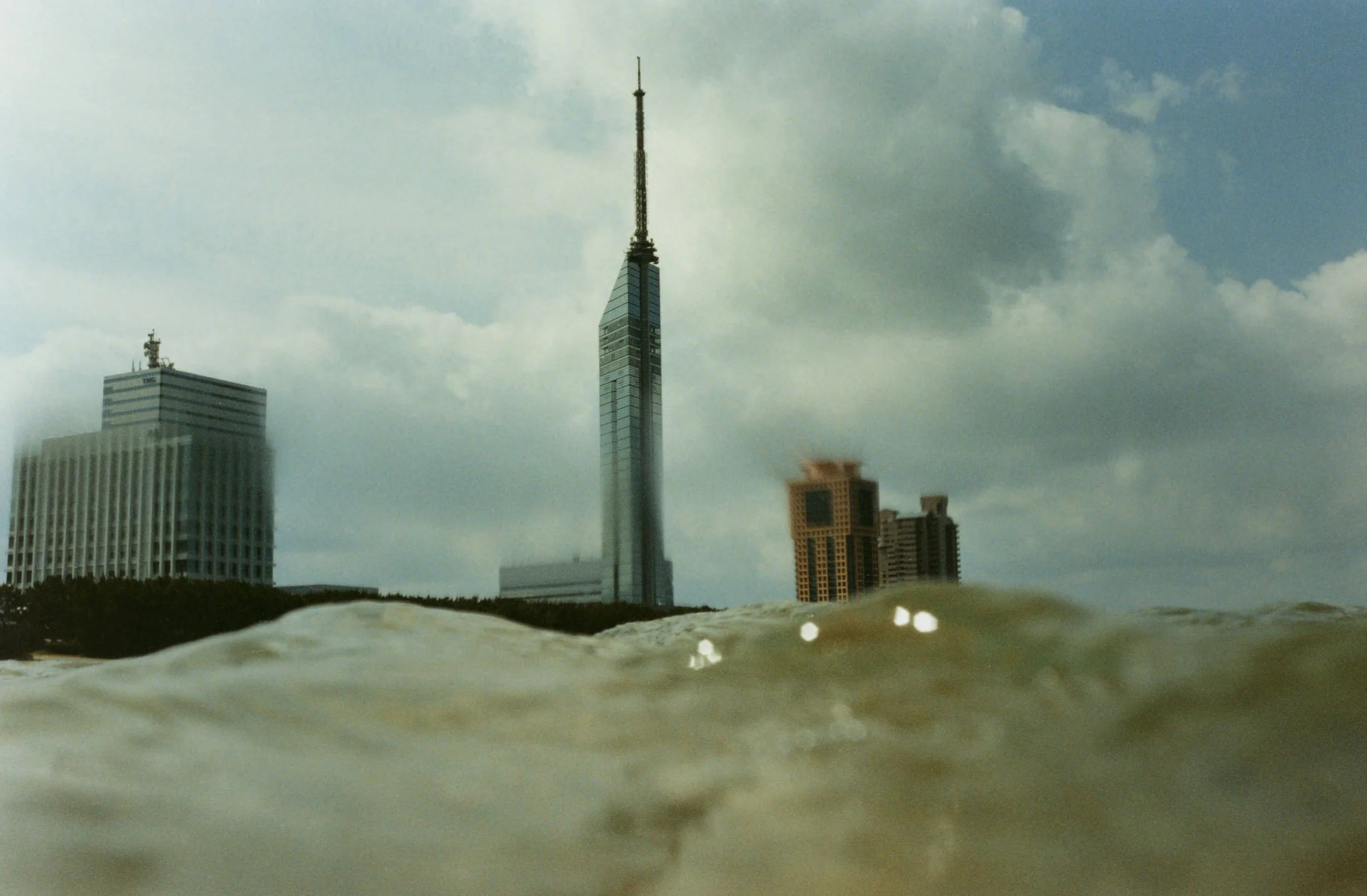
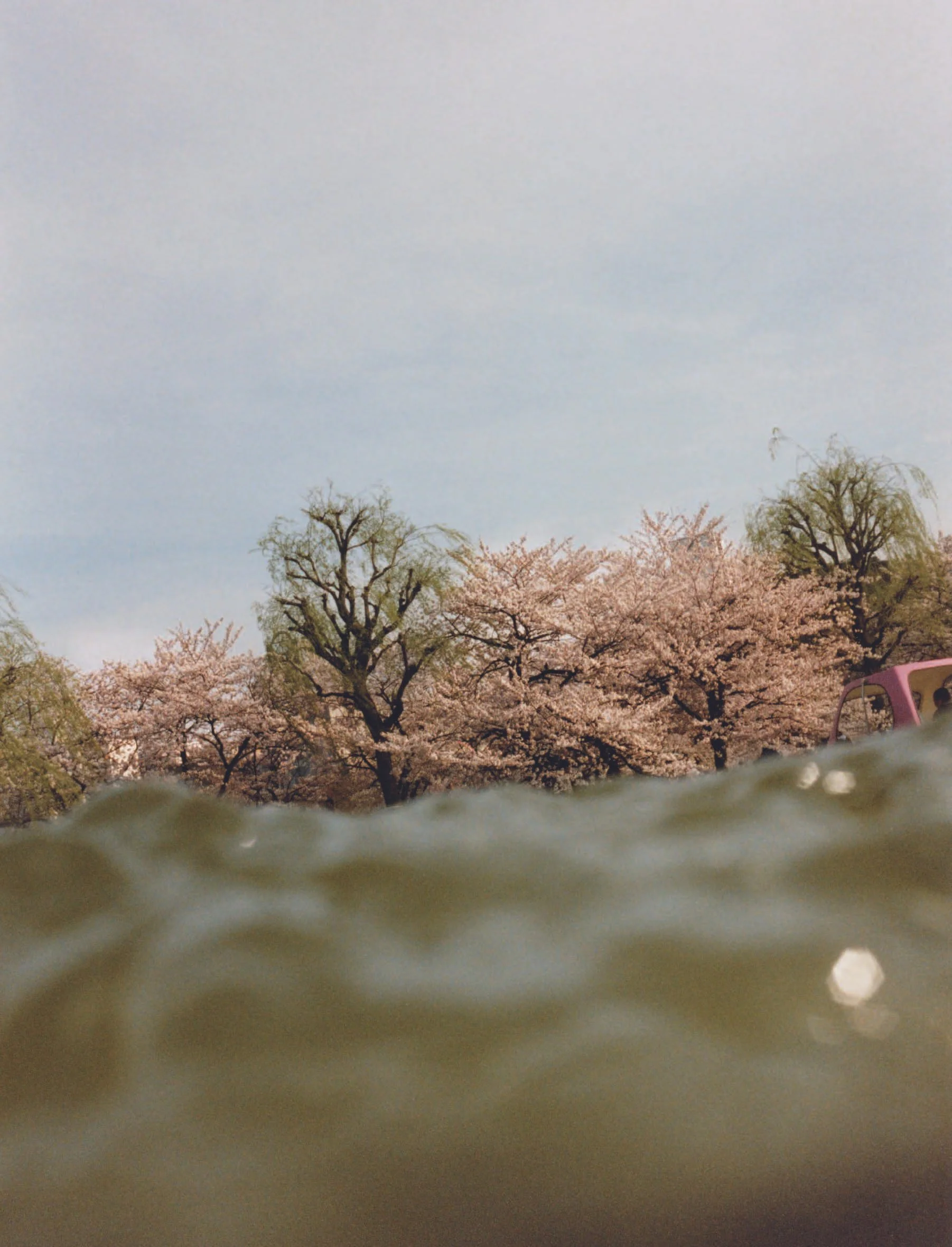
Asako Narahashi snaps her photographs from aquatic points no swimmer is likely to know. She shoots not only the landscapes that flit in front of her camera but also the water itself, which she captures in various stages of agitation. Unlike Peter Hutton’s short film Study of a River, which concerns itself with flux, Narahashi’s work is about stillness. The result is strange: liquid which hardly seems liquid at all. Roiling waves are rendered as dense obsidian because water, for Narahashi, has the depth of the ocean but the surface of bad glass.
It’s not only water we see. Each shot gives us something else to consider: an urban skyline, a row of ecstatic cherry-blossoms, the hull of a passing ship. Where to look? Narahashi upsets our sense of things; viewing her photographs causes us to lose our bearings. The title of her exhibition, Half Awake and Half Asleep in the Water, suggests a state of confusion seemingly central to the work. We experience the soporific rocking of waves just as we do the wakeful shock of a new perspective — the world seen not just from sea, but from within the sea.
Narahashi’s work is about perspective in two ways. Firstly, each piece replicates an individual viewpoint: The observer, whose perspective becomes that of the camera, is placed alone in the water. Narahashi deftly plays off the old adage that each person is an island, with the resulting works serving as ironic odes to solipsism: The view is beautiful, but lonely. Secondly, these photographs disrupt the normal network of spatial relations. Their perspectives’ depth and distance lead to a hallucinatory play with scale: A wave appears to descend upon a coastal metropolis, evoking the sort of comic dread appreciated by the Japanese.
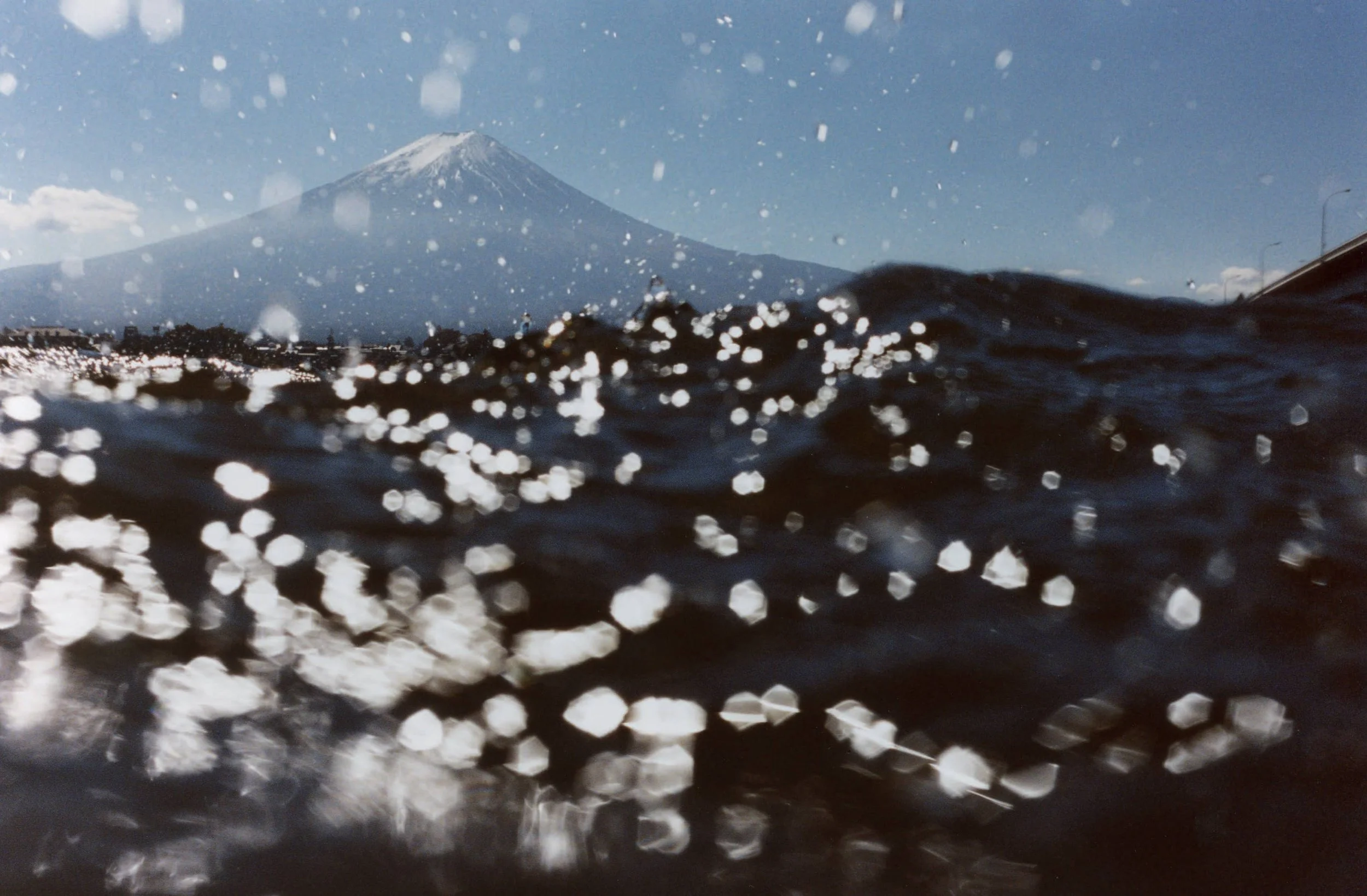
The photographs summon all sorts of millennial anxieties. Jonanjima (2002) glimpses a commercial plane apparently headed toward uneasy waters; Beppu (2003), the chaos of exploding sea spray transposed over Mount Fuji, a sly but disturbing allusion to volcanic eruption. In fact, the ubiquity of water in Narahashi's work — and its suggested domination over land and viewer — evokes a marrow-level fear of global warming and the potential for eustatic apocalypse: The flood may be God’s work but, more likely, it’s ours. Such a message may not be the oeuvre’s purpose, but the effect remains. Out here, drifting either toward or away from shore, the viewer is likely to commune with their own set of aquatic associations.
Originally published in Dossier Journal No. 2, 2009.